Showing posts with label Totally Random. Show all posts

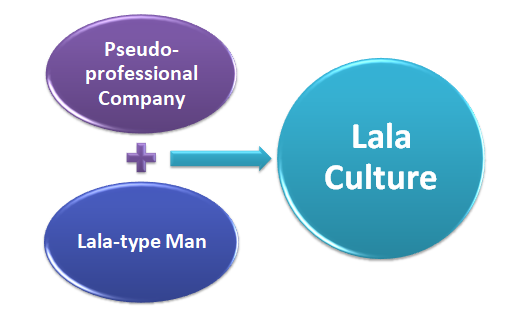
Lala Culture in Pseudo-Professional Companies

There are professional companies.

And then there are the pseudo-professional ones.

The pseudos do all possible things to create the facade of professionalism.

However, peel the first layer off and you get to see the dirty reality immediately.

The top dog in such companies has a fetish for external recognition.

And that is really sick.

Even if you are the biggest rat in a small rat-hole, you are still a rat.

This is exactly the case with the Lala-type man who is the top dog or the top rat in a small shop-type pseudo-professional Lala company!
This man is invited to an important meeting where he is also the chair.

On the day of the meeting, an hour or two before the scheduled start time, this man calls you and tells you that he some other supposedly important engagement.

Which also means this particular meeting is not important!

And asks you to go ahead without him.

He says this meeting will mostly be about the routine stuff.

So its okay to go ahead.

It is actually not okay and only a Lala-type man can make such a statement.

For any company, focusing on the routine stuff is absolutely important to ensure the operations go on smoothly.

Of course, focus needs to be on strategic stuff too.

However in small shops where the Lala is the boss of the house, there is nothing really that can be called as strategic stuff.

The Lala-type man creates a false impression about himself and the small shop he is taking care of more like a watch-man than the top leader.

When told that the so-called routine meeting is an important one and he should attend, this man reluctantly agrees and provides a date and time slot when the meeting can be re-scheduled to.

When the day of the re-scheduled meeting arrives he does something completely non-sense, something only a Lala-type man can do in a pseudo-professional company.

This man is, interestingly, the one who is the chair of the so-called routine meeting.

You are the organizer  of the so-called routine meeting and you have asked someone in your team to send out the meeting request to those who should attend the meeting including the chair (that same Lala-type man).

This Lala-type man does something amusing.

He wants to re-schedule the meeting again by pushing it further by half-an-hour.

That's really crap.

The bigger crap is that he doesn't call and inform you directly.

He calls one of his stooges from the old boys club he has created in the company.

This stooge becomes a messenger  of the top dog.

The stooge tells you that the Lala man wants to move the meeting ahead by half an hour.

You are supposed to comply.

This was told to you for your information only.

You are nothing, just a complete zilch.

Do you feel humiliated?

Not at all.

Why?

Just one reason.

You have seen the same kind of non-sense happen umpteen times already.

There is no surprise.

There is no shock.

After all, this same man has parachuted an incompetent nincompoop over your head with a funny, dysfunctional title.

So what else can you expect other than sheer non-sense?

That nincompoop has only only competency -  he is a "yes sir" stooge.

This Lala-type man is used to such an abnormal style of functioning so you cannot and should not expect anything fair and transparent in such an organization.

The meeting gets shifted and eventually happens also.

What also happens at the same time is, that whatever little respect you had left for this man simply vanishes into nothingness.

You have no choice but to comply with the Lala's wishes, whims and fancies.

You do have a choice regarding how much respect you really have for the Lala in private.

In such companies it will be a zero-respect in private situation, but you would create the facade of just the opposite.

The reason is that you need to play smart with the respect factor for the Lala in public.

And then, the big question.

Lala culture in pseudo-professional companies is a bitter truth.

The faster you adjust to that truth, the better for you.

Don't carry any ego as you will be humiliated again and again.

Be ready for any and all kinds of non-sense.

There should not be any surprise.

There should be any shock.

If you do the above, you will be at peace with yourself.

Do, however, enjoy the experience as you pass through the amusing times you are surely going to have when you work with a pseudo-professional Lala company.

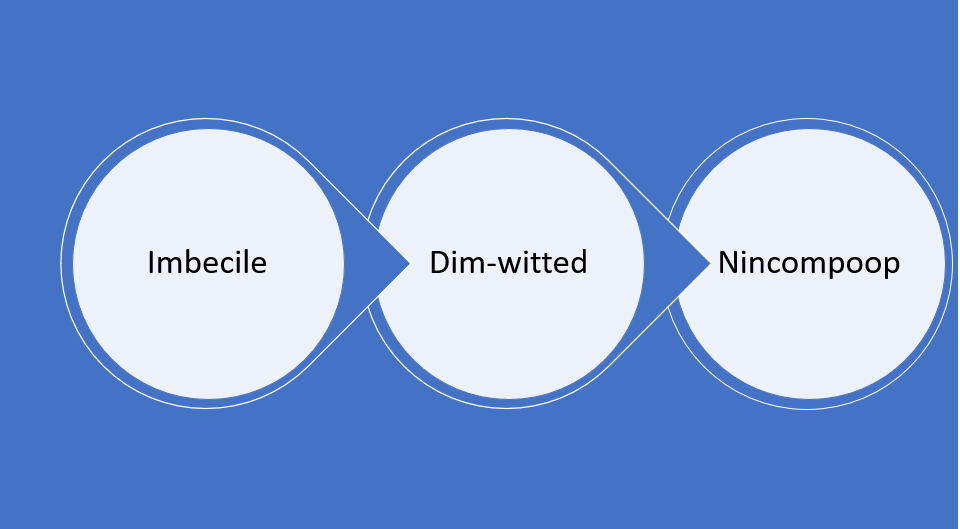
When the Head of Operations in an Imbecile as well as a Dim-witted Nincompoop

The head of operations is a crucial role in any organization.

The person in this role needs to be not only smart and intelligent but also fair and highly professional.

However, in several organizations, the head of operations is effectively a joker.

He is there for one reason.

His loyalty to the top man.

When this person is an imbecile as well as dim-witted nincompoop it is very damaging to the professional fabric of the organization.


Several unfortunate things happen in such a company.

This person creates his favorites in the system.
  • The set of favorites are beyond the usual rules of business operations. 
  • The favorites are into R&D for the future, technology innovation, IP development, competency building, brand building and every such thing where they are not exposed to the pulls and pressures of corporate life. 
  • These special folks are basically living a retired life just like the head of operations himself. 
This person acts with a pronounced bias.
  • He needs to keep his favorites in good humor.
  • He also needs to keep those who he is loyal to happy and needs to prove his loyalty again and again.
  • He doesn't own up to the mess he ends up creating every time he does something due to lack of clarity and poor communication.
This person needs to be a "yes sir" barking dog
  • He needs to bark when told to bark and shut up when told to do so.
  • He has no mind of his own and needs to take orders.
  • He needs to oblige the different sirs in the organization who are letting him carry on with the nonsense and mess that he has created.
This person projects an image of exclusivity and seniority
  • He gets a bigger room similar to other imbeciles in the organization.
  • He goes for lunch with other jerks like him.
  • He is there for long time so has become a senior due to loyalty more than merit and leaves no opportunity to show a sick sense of exclusivity and seniority.
Such imbeciles and dim-witted nincompoops are usually hard to tackle.

They, however, do provide a comical, but not at all necessary, relief from the professional hassles.

In the long run, they end up making the organization sick.

Very sick.

Very very sick.

When a Company is Few Projects, or Worst One Project, Away from Disaster

Some companies have limited number of projects. And even in those projects there are several challenges as explained below.

A certain group of projects are from the parent which are there because of family relations between the management of the company and the parent. This situation carries following risks:
  • What happens when someone in the family on either side either dies or is shunted out?
  • What happens when there is a takeover of the parent?
  • What happens when the parent starts going down the drain?
The biggest project is the only one of its type with the largest team size with people whose skills cannot be utilized outside this project. This situation carries following risks:
  • What happens when the customer of this project terminates the contract suddenly?
  • What happens when there is massive attrition in this project?
  • What happens when there is high level of disengagement in that project due to repetitive but high pressure nature of work?
The projects are mostly small in size and short in duration and their ratio in the overall project portfolio is extremely high. This situation carries following risks:
  • What happens to the core skill-set of the company since work comes based on whatever is the flavor of the season?
  • What happens to people who are brought with specific skill-sets for executing a project and have no real work after the project gets over?
There are too many internal projects with no clear defined deliverable as well as no real estimate of their return on investment. This situation carries following risks:
  • What happens when these projects are staffed with heavy weights (not heavy in terms of competency but in terms of compensation)
  • What happens when these projects stay in R&D mode forever with no real, concrete outcome getting generated.
There are many reasons for this to happen the primary being lack of professionalism and real leadership in such companies.

Decisions in such companies are taken in meetings where the funny four musketeers meet their master.

The master is like the ring master in the circus and the funny four are like donkeys without any brains or ethics.

Such companies are run on the whims and fancies of the master.

The master also has his master controlling him remotely from a far away site.

The company is more of a circus then a company.

And such companies are just a few projects, or worst one project, away from disaster.

Why Resource Management is the Name of the Game in Project-based Companies?

Project-based companies get work as an outcome of a successful bid for the customer's work beating other players in the fray to finish as the winner.

And by the very nature of the business model in such companies, the key to operational success is resource management.

At times getting work is easy but executing it is tough!

Here are some reasons why resource management is so crucial:
  • The company may not have the right quantity and quality of people needed to execute the project so they may have to hire people in quick time or move people from elsewhere and then back-fill them. As hiring is done "just in time" cost of hiring may be much higher than usual.
  • In case the positions are billable by hour or week and they remain open for long, the delay in hiring has a direct impact on the revenue.
  • In case of a fixed-price project if the positions remain open for long, the delay in hiring creates pressure on the existing team as they will need to stretch. This may, in turn, lead to team motivation and productivity issues and even attrition which increases the pressure even further.
  • The people deployed on the project may not have the needed skills so they will need to be trained on that skill at a fast pace. Not only will the accelerated competency building not really that useful it also pulls people away from working on the project during the time they are away in a training.
  • People engagement and motivation is important in projects especially in those projects where the skills are rare and/or the schedule commitments are very tight. Loss of a team member can easily put a well-running project into a major crisis.
  • Getting and retaining people in certain skill-sets may be tough as the prospective candidates and existing employees in that skill may realize that the project they are being hired for or working in respectively may be a one-off project. So the question on their mind would be - "what will I do after this project?"
  • There is always a conflict between the organizational and individual interest in respect of skill development. Company would encourage employees to go for a very high level of multi-skill and cross-skill development.
  • On the other hand, for an individual it  makes no sense to be a "jack of all trades and a master of none" as that will dilute his value in the job market. The positive side is that the individual can multi-skill and cross-skill to a certain extent so as not to remain a "one-trick pony" which can jeopardize the career in case the one skill the individual has looses its demand in the market.
In such companies, putting people into a project the very first day billing starts and taking out on the very day billing stops is the ideal situation be in. This leads to zero revenue loss.

As this may not be possible in reality, the goal should be to minimize the delay in putting people in and in taking people out from the project.

Maintaining the current allocation of people across the various running projects and "on bench" and the plan for moving people across projects in the next few months is a sine-qua-non to even survive in such a business.

The farther it can be planned the better it is, though the plan needs to be updated constantly. And that is so, since resource management is the name of the game in project-based companies!

How Starting a Project on a Bad Note Impacts an Organization?

Project failure is defined as either delivering late, or delivering with too many issues or delivering somehow but with abysmally low profit margin (or even at a loss, at times).

Failures happen too often in project-based companies that need to bid against the others in the fray.

The lowest bidder gets the preference assuming it is at par with others in respect of technical and other considerations. The company may win the bid but ends up loosing money eventually.

The above is a result of the winner's curse.

Bidding involves sales teams whose only motivation is to bag an account. So they may undercut the real estimates by making wayward assumptions related to actual execution capability.

The person handing the execution may be incompetent in not knowing when the execution capability, work estimates and customer commitments are grossly off the mark.

Also there may be organizational dynamics where the execution lead is not able to push-back the sales lead.

Starting a project on a bad note means one or more of the following:
  • People with needed skills and competences are either not available at all or in the right numbers
  • Estimates are too aggressive and not based on correct set of assumptions
  • Commitments made to the customer are not grounded in reality
  • Organization is forced to accept any and every work even when it lacks the execution capability
  • Execution arm of the organization is forced to take up work as they are weak as compared to the sales arm
Starting a project on  a bad note may prove to be disastrous for any organization.

It may lead to major losses on account of such projects and erode its overall profitability.

Here are some ways it impacts an organization:
  • People are forced to take short-cuts and may not follow defined processes
  • People would indulge in blame games within the project team and with the others outside
  • Sales and execution arms remain at loggerheads throughout the project
  • People have to work much harder than usual to cover-up for  the follies committed before the execution kicks in
  • People are assigned to project even if they do not have the required skills and competency
  • Skills and competency enhancement exercise is carried out in a fast-track mode which is generally not at all effective
  • People are told to get things done, somehow and due to excessive pressure some of the team members may even leave mid-way
  • Management starts demanding more and more data and reports from such a project which puts additional burden on the project team
  • If and when the project is able to get the delivery done there may be congratulatory email from the big-shots who only created the mess in the first place
  • And finally, such a project becomes a natural choice for the best project of the year! 
Such a project getting the best project award is an absolute irony.

The best project award is supposedly given to recognize the project team's commitment but is actually meant to cover-up the incompetence and lack of systems approach at the management level. 

How Open Source is Actually Closed?

Open Source Software (OSS) has become a standard item in the lexicon of folks working in IT companies and departments. The charm of getting source code at no cost seems so appealing that everyone is for OSS.

Despite no commercial company pushing, at least willingly, the case for using OSS it seems to grow like wild weed across the business world.

The use of the term "Open" may appear as a deliberate attempt to sell OSS. The term "Open" hints at the following:
  • transparent
  • easy to access, adopt and adapt
  • no discrimination among its users
It might be interesting to note that the concept of Open Source can be compared to that of the Agile Method. Apart from clever usage of judiciously selected jargon these concepts have evolved as a result of the anti-establishment sentiments shared by some of the founder members.

For every X which existed an anti-X or X-complement was evolved as a better solution to a known problem. So for Waterfall you have Agile and for Proprietary Software you have Open Source Software.

It is however completely debatable as to the agility of Agile (just think of the SCRUM rituals) and the openness of Open Source Software (just think of GPL terms and conditions).

Of course OSS does offer certain advantages like:
  • increased coding productivity
  • assurance from use of proven code
  • multiple code options for a functionality
  • visibility into code-level implementation allowing complete customization
However, as is commonly understood there is no free lunch and also every coin has two sides, OSS is not actually that open but rather closed in many ways.

OSS comes with certain limitations, constraints and risks as listed below:
  • higher exposure to legal violations
  • easy availability of code may choke creativity and inventiveness of programmers
  • lack of timely support or no support available in case of issues with OSS
  • programmers may have to spend more time pondering on legalities rather than technicalities (this may conflict with the psychology of a typical developer)
  • Some OSS licensing may require "opening" up the code written using the OSS (for business organizations selling software source code is akin to IP, trade secrets and hence using OSS will make no business sense in certain instances)
Going by the trends currently visible it seems OSS is well on its way to increased usage. And if that is so, companies must understand both the pros and cons and evaluate where to use OSS and to what extent.

It is always good to remember that there is no free lunch and also every coin has two sides.

Excel Formula for Computing Age

Given the date of birth, how to compute the age 'as on date' (in years and months) using MS-Excel? I worked on this problem yesterday... and as this may be useful for others I thought of posting it here.

Set up an MS-Excel sheet in the following manner (depending on your comfort with Excel, you can set this up differently also - the key thing is that the linkages between the cells must be kept intact.)

Cell B2 = Date of birth -> to be inputted

Cell D2 = Now() -> this in-built Excel function gives the date and time 'as of now'. This makes the computation of age dynamic.

Cell F2 = Copy the formula below:
=IF(B5="","?",IF(YEAR(D5)-YEAR(B5)<=0,0,IF(MONTH(D5)-MONTH(B5)<0,YEAR(D5)-YEAR(B5)-1,YEAR(D5)-YEAR(B5)))&" Yrs "&IF(YEAR(D5)-YEAR(B5)<0,0,IF((YEAR(D5)-YEAR(B5))=0,IF(MONTH(D5)-MONTH(B5)<0,0,MONTH(D5)-MONTH(B5)),IF(MONTH(D5)-MONTH(B5)<0,12+(MONTH(D5)-MONTH(B5)),MONTH(D5)-MONTH(B5))))&" Mths")

The above formula has been set-up using in-built Excel functions year(date) and month(date) and works in the following manner:
1. If date of birth is missing, "?" will be shown
2. If year/month in the date of birth is either same as or after the year/month 'as on date', "0 Yrs 0 Mths" will be shown
3. In all other cases the age 'as on date' (in years and months) will be shown

Power of MS-Excel

MS-Excel is truly a powerful tool. After having used it for so many years, here's what I think makes it truly useful and all-powerful:
1. Easy to learn and use
2. Highly flexible and customizable
3. So many features such that something is there for almost all kinds of situations
4. Can be used for both simple and complicated calculations - logical, mathematical, statistical, etc.
5. Excellent charting capabilities
6. Can be used as a database as well
7. Can be integrated with other MS-Office applications easily, using OLE (Object Linking and Embedding)
8. Can be used to automate repetitive tasks, using macro programming in VBA (Visual Basic for Applications)

Excel Formula for Computing Income Tax

While trying to calculate my tax liability, I happened to create a single cell formula in MS-Excel which computes the tax liability based on the total taxable amount as the input to it. This formula will be helpful to many others so I thought of sharing it with all those who are looking for an excel formula for tax computation.

Step 1: Copy the formula given below in cell I25 of an excel sheet

=IF(H25<=160000 , 0, IF(H25<=300000, (H25-160000)*10%, IF(H25<=500000, (H25-300000)*20% + (300000-160000)*10%, (H25-500000)*30% + (500000-300000)*20% + (300000-160000)*10%)))

Step 2: Enter the total taxable income for FY 2009-10 in cell H25 in the same excel sheet

Step 3: Computed value in cell I25 is the tax liability – it will be automatically computed by the above formula

Note that there are four tax slabs as of this year (FY 2009-10) as explained below:

Upto 160000 INR – No tax (0%)
More than 160000 INR and Upto 300000 INR – 10% tax
More than 300000 INR and Upto 500000 INR – 20% tax
More than 500000 INR – 30% tax

This formula can easily modified for use in the next FY and even beyond even if there are any changes in the tax slabs. The logic would remain the same, the value and the formula construct may need to be tweaked appropriately.

MS-Excel Random Sample Selector

I developed an MS-Excel utility recently for selecting a random sample. This utility takes the population size and sampling percentage as inputs and generates a random sample from a larger set of observations (population).

This utility runs over an MS-Excel VBA Macro. The sub-routine within the VBA Macro makes use of Randomize and Rnd functions to generate random numbers.

Click here to download the MS-Excel Random Sample Selector.

Conditional Combo-box List in MS- Excel

While working on MS-Excel, many times we need to create a combo-box list. Combo-box list ensures that users can select only from the provided pre-defined values and also there are no typo errors in the inputted values. There are times when one needs to create two connected combo-box lists for making combination choices.

With the simple combo-box list method that MS-Excel provides, selecting one value in the first combo-box cell doesn’t influence the values shown in the second combo-box cell. For example, if one selects a “State” name in one cell, the other cell would show names of all “City” and not just those that are in the selected “State”.

For this one would need to use a cascading or conditional combo-box. Using a cascading or conditional combo-box would make sure that after one selects a “State” name in the first combo-box, the “City” combo-box will show only those cities that are in the selected state.

I have struggled with the above many times, so thought it may be a good idea to create a sample example for both:
How to build a simple combo-box list in Excel?
How to build a cascading or conditional combo-box list in Excel?

Click here to download the sample example file.

LAMP for Small Business Enterprises

A key consideration for small-sized business enterprises (also known as SME - Small and Medium Enterprises) is to use cash wisely. Buying licensed software is a major expense head for small business enterprises. The percentage expense on software as compared to the total expenses could be significantly high for many small business enterprises. This motivates them to find cheaper yet reliable alternative software. Cost is important but so is reliability before a small business enterprise decides to adopt any software technology.

Open source software has become a strong competing alternative of licensed software for business enterprises, especially the small-sized ones. One of such solution package available to enterprises is the LAMP stack.

The LAMP stack offers a proven yet cheap solution for small business enterprises to put IT to effective business use. LAMP stands for a set of four proven open source software technologies:

Linux Operating System - this is a robust platform for hosting both web-based and non-web-based applications and database services.

Apache Web Server - this is a robust web server which can be scaled up like any other commercial-grade web server. As the future of application hosting clearly seems to be web-based a proven yet cheap web server will be immensely useful.

MySQL Database- this is a robust database. As the future seems to belong to data-intensive applications a proven yet cheap database will be immensely useful.

PHP Language - this is a powerful yet simple to use scripting language. As the future seems to belong to application development through integration of pre-built software components using 'glue' code rather than writing 'fresh' code every time a simple to learn and use scripting / programming language will be immensely useful.

LAMP surely needs to undergo improvements to make it more robust and usable but the direction it seems to be taking appears to be the way the business world is headed towards. LAMP has the potential to provide a powerful yet cheap IT solution development platform and is surely going to help the small business enterprises in conserving their cash.

Open Source BPMS

Here's a list of some open source BPMS:

1. Intalio

2. ProcessMaker

3. JBoss jBPM

4. bonitasoft

5. Enhydra Shark